
Weekly Mortgage & Market Update
Week of May 4, 2026 in Review
Strong Headline Jobs Number, Softer Details Underneath
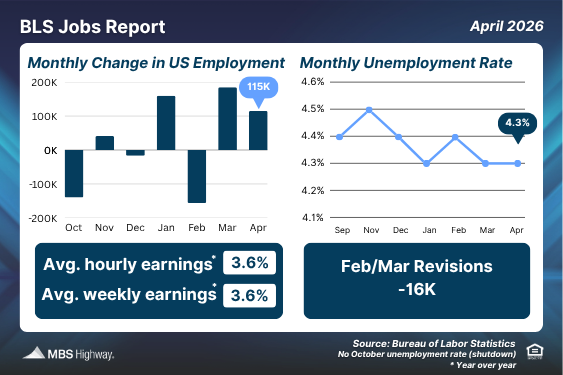
April job growth came in above expectations, with the economy adding 115,000 jobs while the unemployment rate stayed at 4.3%. On the surface, the report looked encouraging, but the details underneath were softer. Full-time employment fell sharply, while part-time employment increased. There was also a noticeable rise in people working part-time because they could not find full-time jobs. Most of the recent hiring continues to come from Health Care and Social Assistance, which reflects growing demand from an aging population more than broad economic strength.
ADP Jobs Data Shows a Split Market
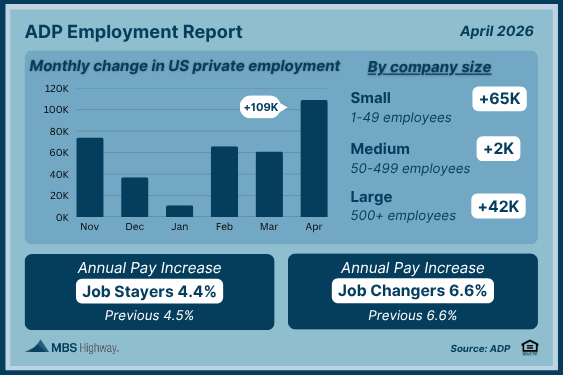
Private employers added 109,000 jobs in April, beating most forecasts, but the gains were uneven across the economy. Small and large businesses added jobs, while mid-sized companies showed signs of weakness. Many of the jobs added by small businesses were part-time or lower-paying positions. Wage growth for workers changing jobs remained stronger than for people staying put, though the gap has narrowed compared to recent years, showing the job market is becoming less competitive overall.
Additional Labor Data Paints a Mixed Picture
Other labor market reports also showed mixed results. Job openings edged lower and remain far below the levels seen in 2022. Continuing unemployment claims stayed elevated, suggesting it is taking longer for many workers to find new jobs. Layoffs increased in April, and AI-related restructuring was listed as the leading reason for job cuts for the second month in a row. Overall, while some labor market data has stabilized, signs of slower hiring and underlying weakness remain.
New Home Sales Exceed Expectations
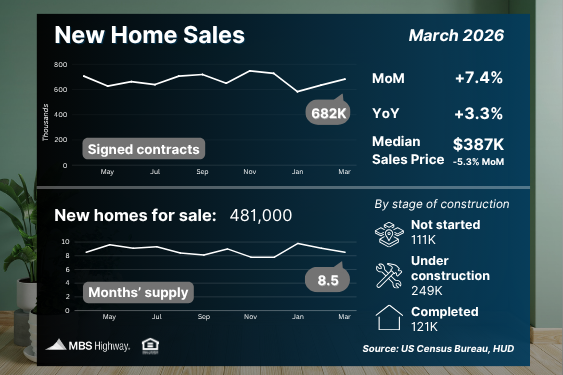
The housing market continued to show strength as new home sales rose 9% in February and another 7.4% in March, marking nearly a 17% increase since January. Some headlines focused on a drop in the median home price from February to March, but that was largely due to more homes selling below $500,000 rather than falling home values overall. A lower median sales price does not necessarily mean home prices are declining.
Home Price Forecast Highlights Buyer Potential
Home prices rose 0.4% from February to March and are also 0.4% higher than a year ago, according to Cotality. The company now expects home prices to increase about 5.1% over the next year. For example, a $500,000 home appreciating by 5% would gain about $25,000 in value over one year, highlighting how real estate can continue building wealth over time.
What to Look for This Week
This week’s key reports include Existing Home Sales, inflation data through the Consumer Price Index and Producer Price Index, Retail Sales, and Jobless Claims. These reports will give markets a better sense of where the economy and interest rates may be headed next.
Technical Picture
Mortgage Bonds improved on Friday and moved above important technical resistance levels, while the 10-year Treasury yield moved lower toward support near 4.33%. Markets could still remain volatile in the near term as investors continue watching economic and inflation data closely.
Source - MBSHighway